FY25 Annual Report
April 1, 2024 – March 31, 2025
Letter from our President and CEO

As I look back on the past year, I am filled with gratitude and optimism. Historic New England continues to grow as a dynamic force for preservation, education, and community, thanks to the extraordinary dedication of our staff, volunteers, trustees, and supporters across the region. Together, we are reimagining what preservation means for the twenty-first century and demonstrating its power to build connection, resilience, and belonging.
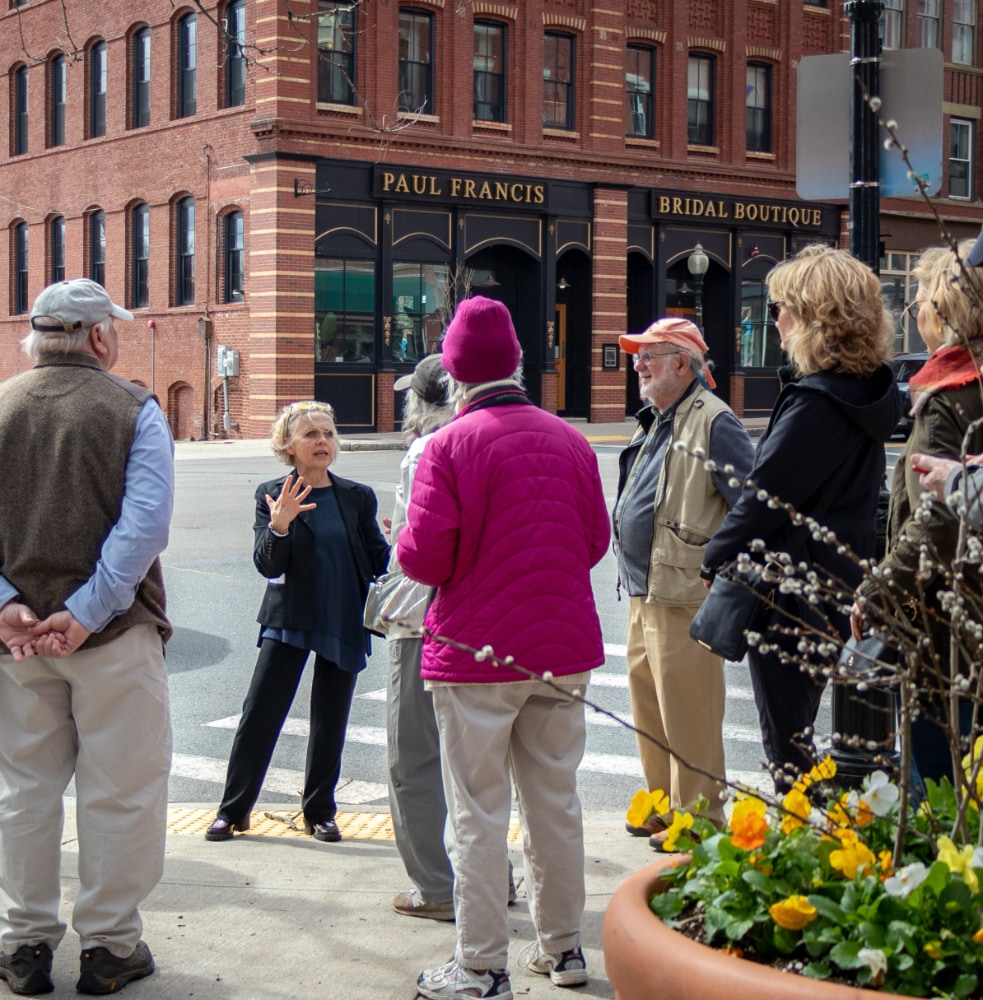
This year, we advanced bold initiatives across the organization. In Haverhill, the Historic New England Center for Preservation and Collections is coming to life. This adaptive reuse project will stand as both a beacon of creativity and a catalyst for community revitalization. Across our thirty-eight history museums and landscapes, we are embedding sustainability and climate action into every aspect of stewardship, modeling how cultural organizations can lead in confronting the global climate crisis.
We have also deepened our commitment to telling the full and inclusive history of the region, through Recovering New England’s Voices and our partnership with Stopping Stones, sharing and amplifying stories that have too long gone untold. Our exhibitions, programs, and collaborations—from Historic Wαpánahkəyak to The Importance of Being Furnished: Four Bachelors at Home—invite dialogue, inspire empathy, and connect people more deeply with the region we call home.
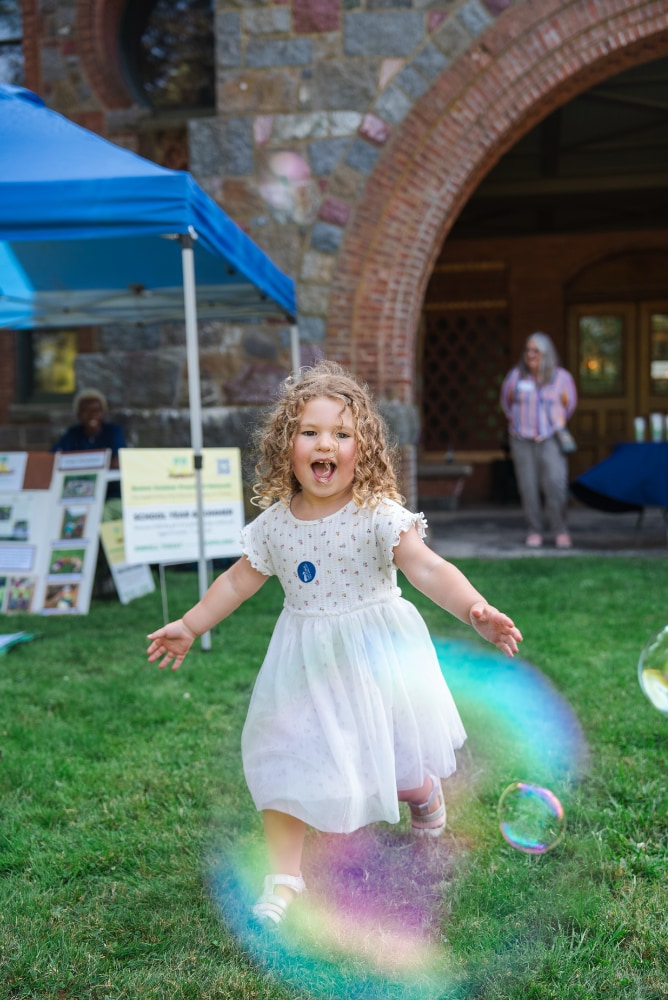
Equally inspiring are the thousands of students who experienced hands-on learning at Pierce House, where history comes alive in new and inclusive ways. These young people remind us why our work matters: because the stories we preserve today shape the future we build tomorrow.
None of this progress would be possible without you, our supporters. Generosity and belief in our mission fuel everything we do. Together, we are not only preserving the past but building a more vibrant, connected, and enduring future for New England.
With our deepest appreciation for your commitment to this work,
Vin Cipolla
President and CEO
Reimagining Preservation
The Historic New England Center for Preservation and Collections
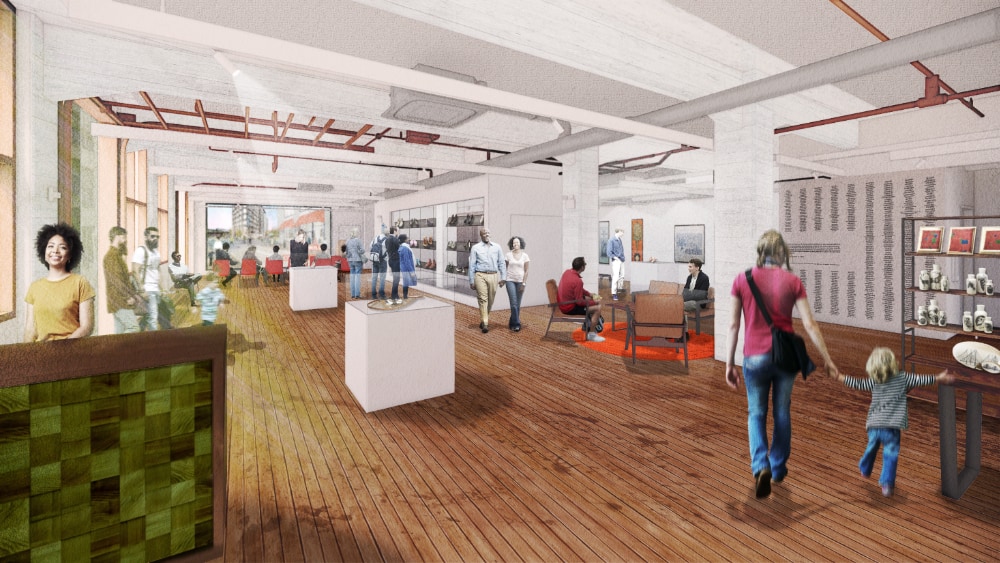
A bold and transformational vision is taking shape in downtown Haverhill. Through the adaptive reuse of Historic New England’s historic shoe factory buildings, the Historic New England Center for Preservation and Collections will serve as the heart of a vibrant new cultural district—one that celebrates creativity, innovation, and community.
Designed as both a preservation hub and a public gathering place, the Center will anchor Haverhill’s downtown revitalization, fostering partnerships across the arts, business, environmental, and social sectors. This landmark initiative will not only safeguard New England’s vast material culture but also generate new energy, visitors, and revenue for the region.
In summer 2026, we will open the Welcome and Exhibition Center, a dynamic, state-of-the-art space that invites visitors to engage deeply with our collections, exhibitions, and public programs. The inaugural exhibition, Shoe Stories: Past, Present, Future, will trace more than four centuries of New England’s shoemaking legacy and design innovation, featuring highlights from the Stuart Weitzman collection at Historic New England.
This project represents far more than a new facility—it’s a catalyst for economic vitality, creative exchange, and community connection, positioning Haverhill as a center for cultural preservation with global reach.
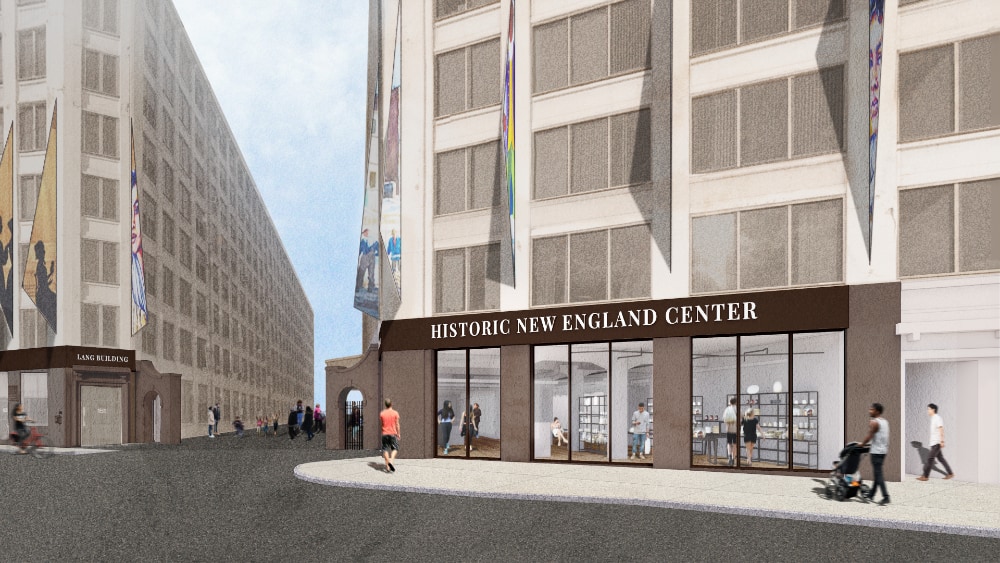
Opening
Summer 2026
Haverhill Welcome and Exhibition Center
Preserving the Past, Protecting the Future
Climate Action at Historic New England
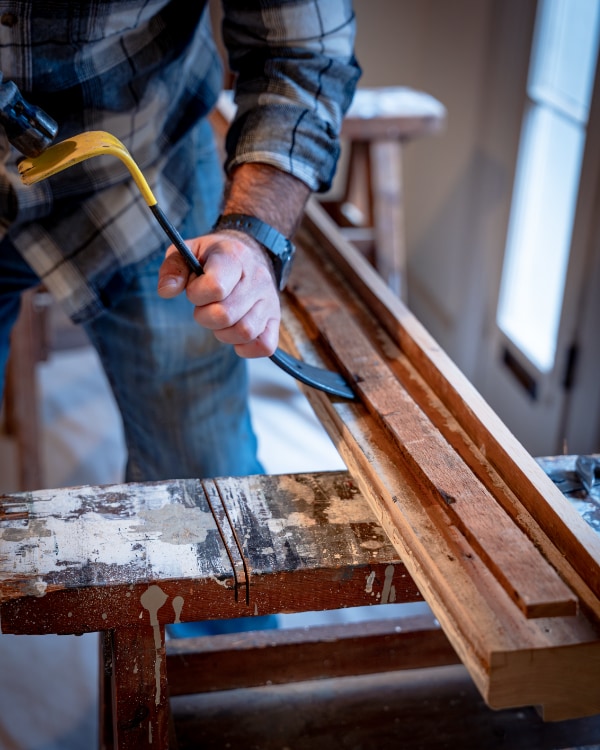
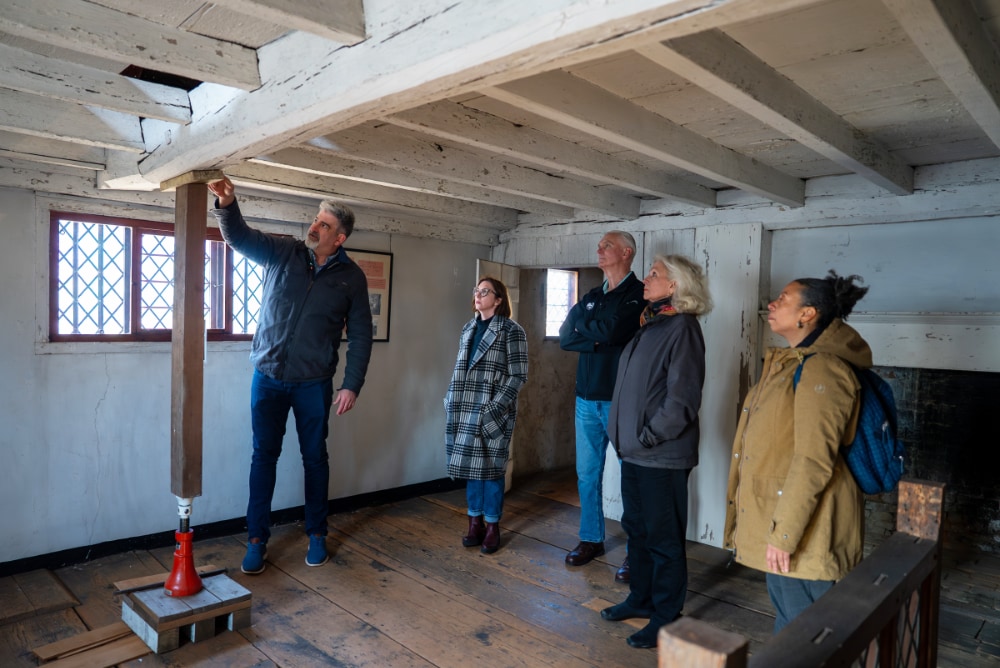
Historic New England is taking bold steps to confront the global climate crisis and safeguard the region’s history and culture for generations to come. Guided by our institutional climate action plan, we are working to reduce our greenhouse gas emissions, promote the resilience of our properties, and advance climate justice through education and programming.
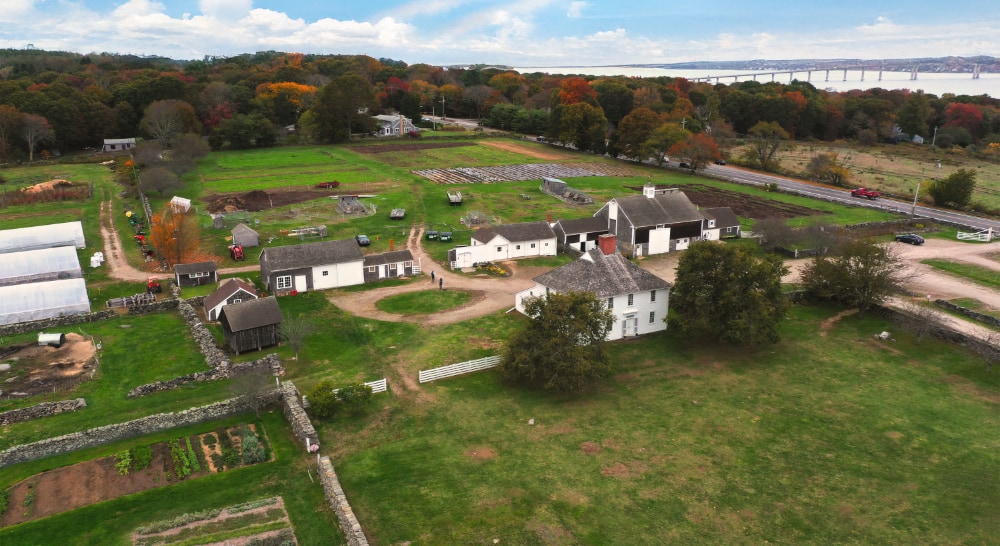
Stakeholder-informed climate action planning, piloted at Casey Farm, was completed at Pierce House in early 2025. Continuing this work—and prioritizing the participation of community members and site users—has deepened our understanding of the challenges we face and expanded our capacity to address them across all thirty-eight historic sites.
By embedding sustainability into every aspect of our stewardship, we are not only protecting irreplaceable architecture, objects, and landscapes. We are demonstrating that preservation is climate action and modeling a more resilient and equitable future for our communities.
2,400
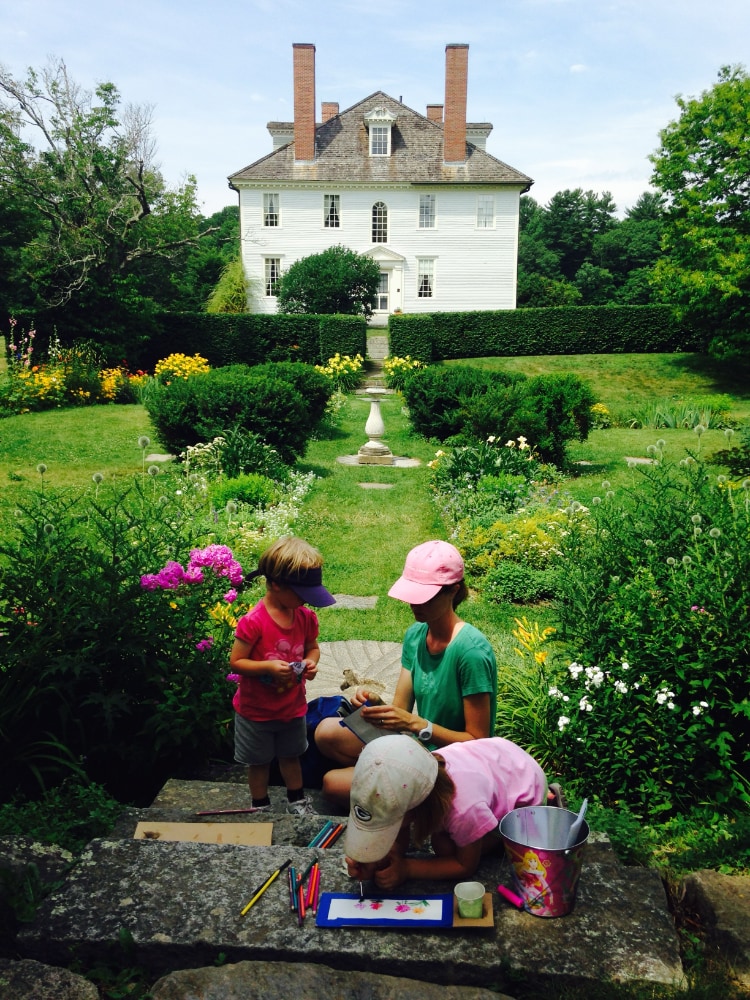
Acres of historic gardens and open spaces that Historic New England preserves
Compelling Exhibitions
The Importance of Being Furnished and Historic Wapánahkəyak
In FY25 Historic New England continued to present exhibitions that spark curiosity, inspire dialogue, and broaden understanding of our region’s diverse histories and cultures.
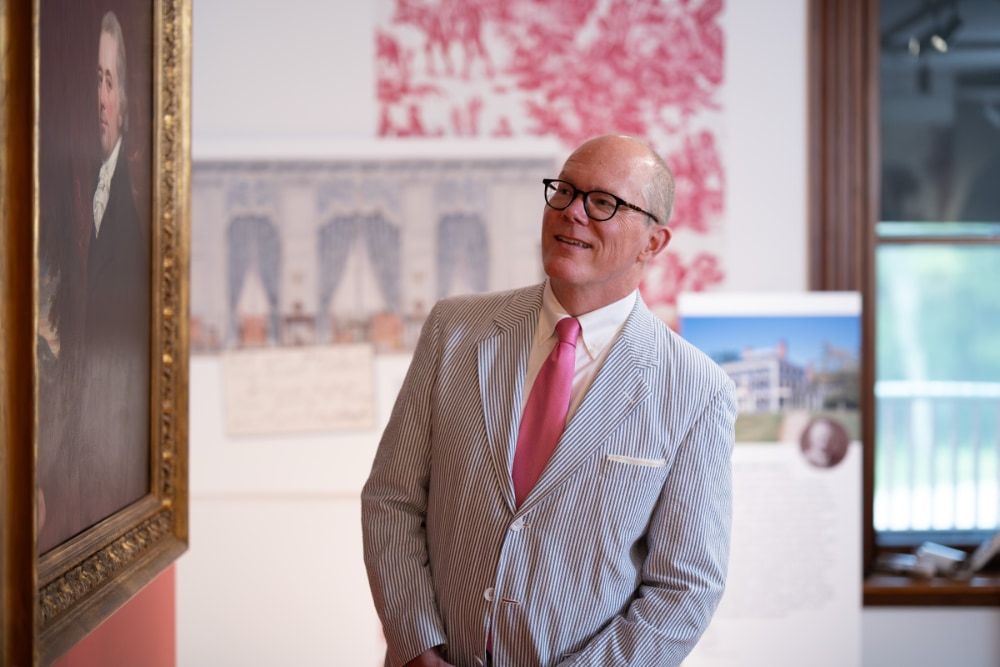
The Importance of Being Furnished explored the evolution of American interior design through the lens of four historic houses and the visionary individuals who shaped them. Guest curator R. Tripp Evans illuminated the pioneering influence of the “bachelor aesthete” in preservation, collecting, and design—revealing how these men redefined the concept of home and style in ways that challenged convention. Through exquisitely crafted objects and immersive storytelling, the exhibition invited visitors to see interiors not only as spaces of beauty, but also as expressions of identity and independence.
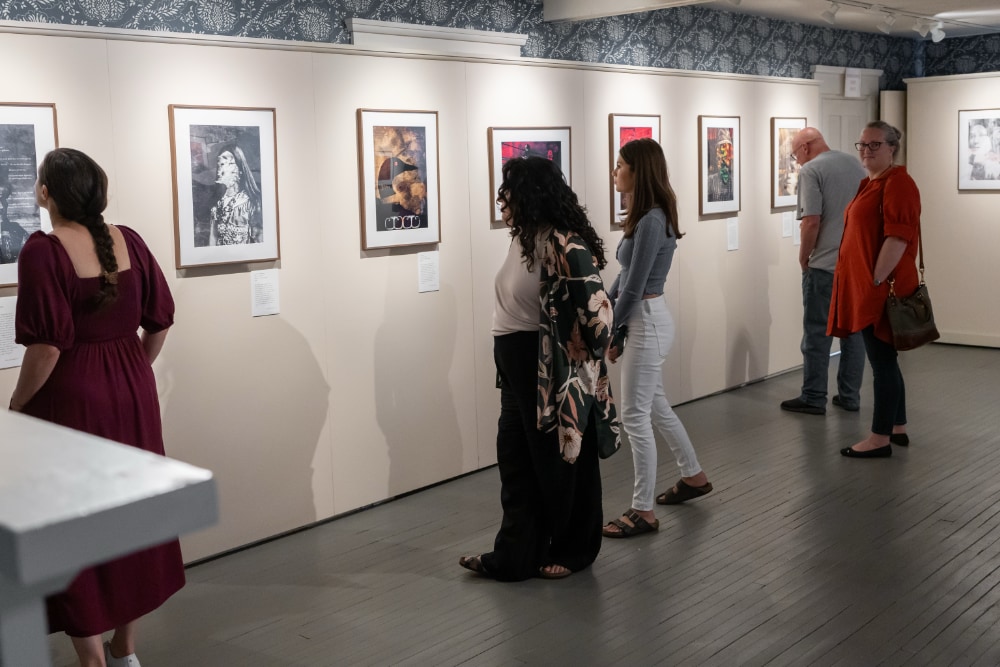
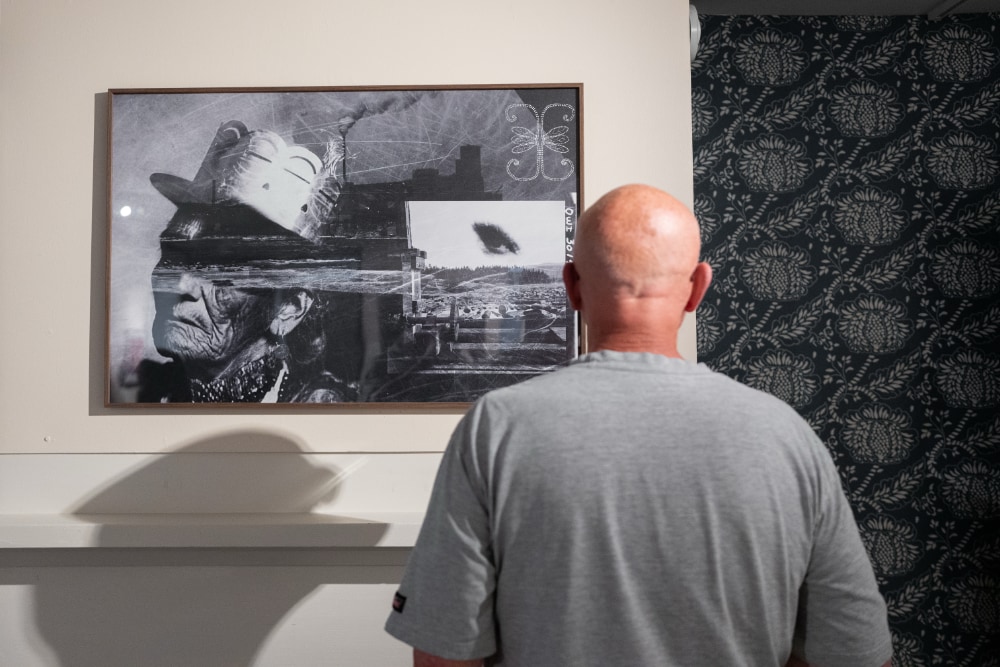
At Sarah Orne Jewett House, Historic Wαpánahkəyak showcased a series of striking digital collages by Panawáhpskewi artist Lokotah Sanborn. Recasting late nineteenth- and early twentieth-century photographs originally taken by Euro-American anthropologists, Sanborn’s work powerfully reclaims these images—transforming them into vibrant celebrations of the living Wapánahki culture. The exhibition underscored the resilience, creativity, and enduring presence of Indigenous Peoples in New England today.
Stopping Stones
and Recovering New England’s Voices
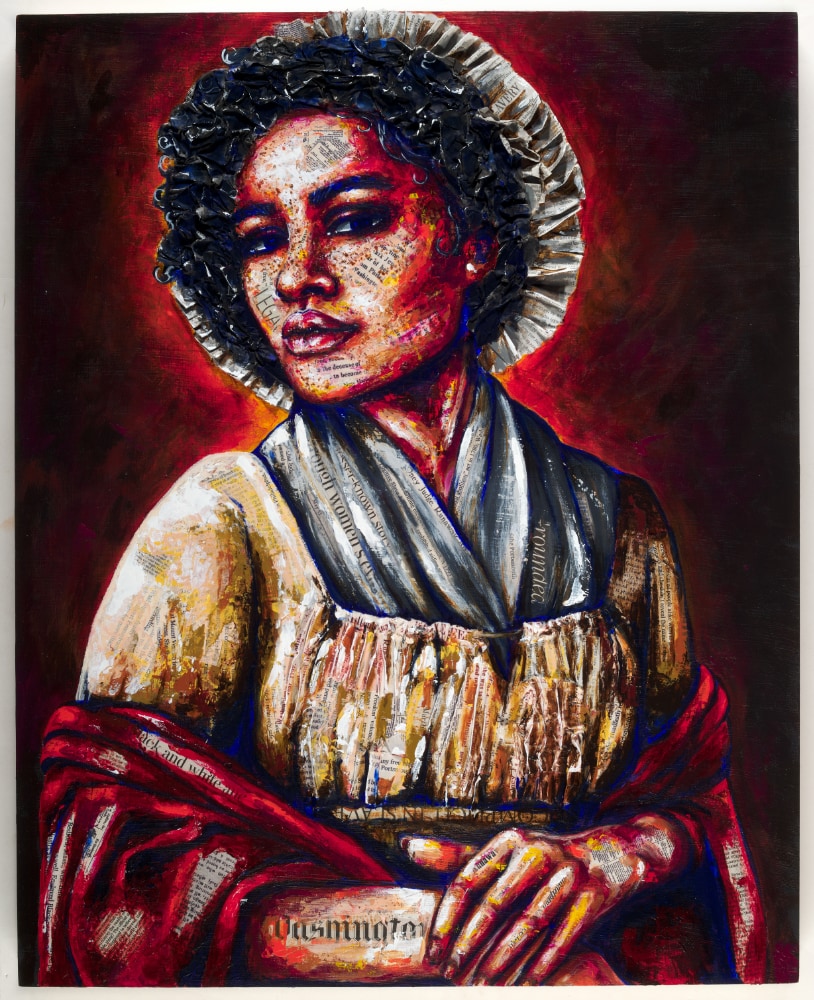
Through Recovering New England’s Voices, Historic New England is uncovering and amplifying the stories of people whose lives and contributions have long been marginalized or overlooked. Scholars are conducting groundbreaking research on immigration, labor, and cultural exchange.
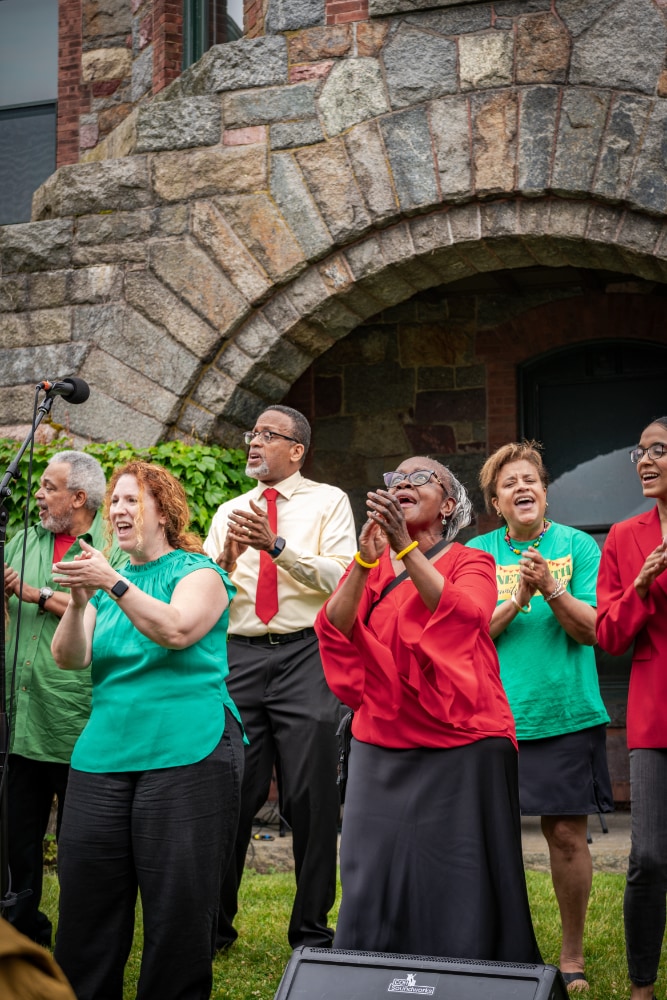
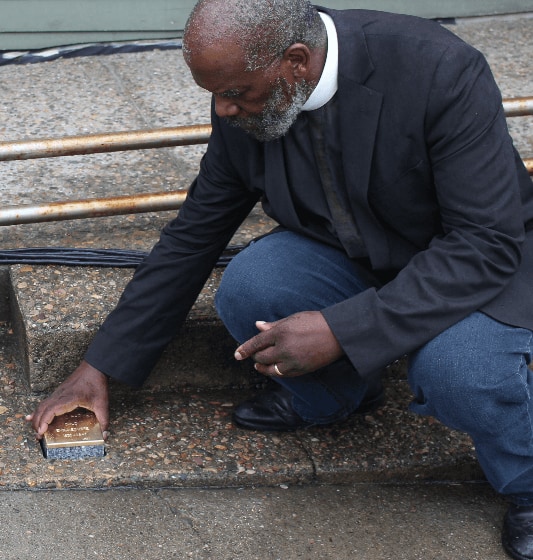
This past year, the initiative reached an exciting milestone with a transformative partnership with Stopping Stones, a national project that commemorates the lives of enslaved individuals through research and public markers placed in the communities where they lived and worked. Together, we are identifying and documenting these individuals’ histories across New England, integrating their voices into our sites, programs, and interpretation.
By linking rigorous scholarship with public remembrance, this collaboration ensures that the full breadth of New England’s history—its triumphs, injustices, and ongoing legacies—is recognized and shared. Recovering New England’s Voices and Stopping Stones exemplify Historic New England’s commitment to truth-telling, inclusion, and the power of history to foster empathy and understanding across generations.
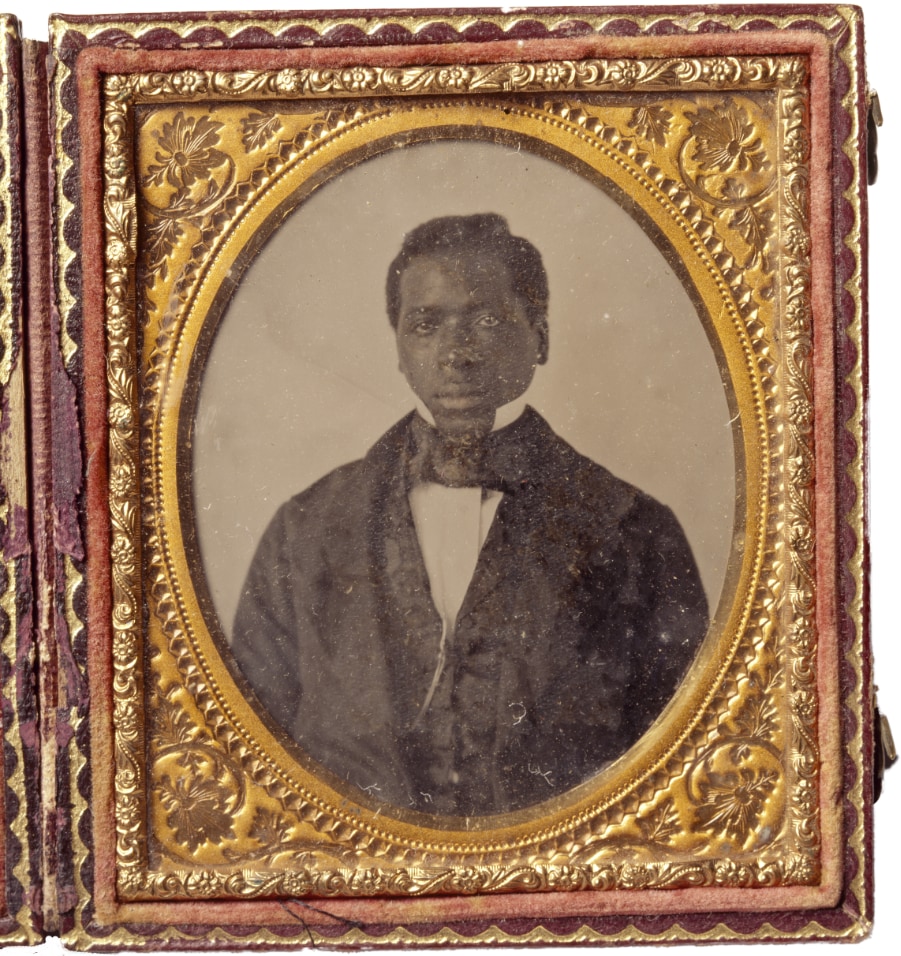
Recovering New England’s Voices ensures the stories of immigrants, women, people of color, and people with disabilities are woven into our interpretation of our sites or institutional initiatives.
Welcoming Students
to Pierce House
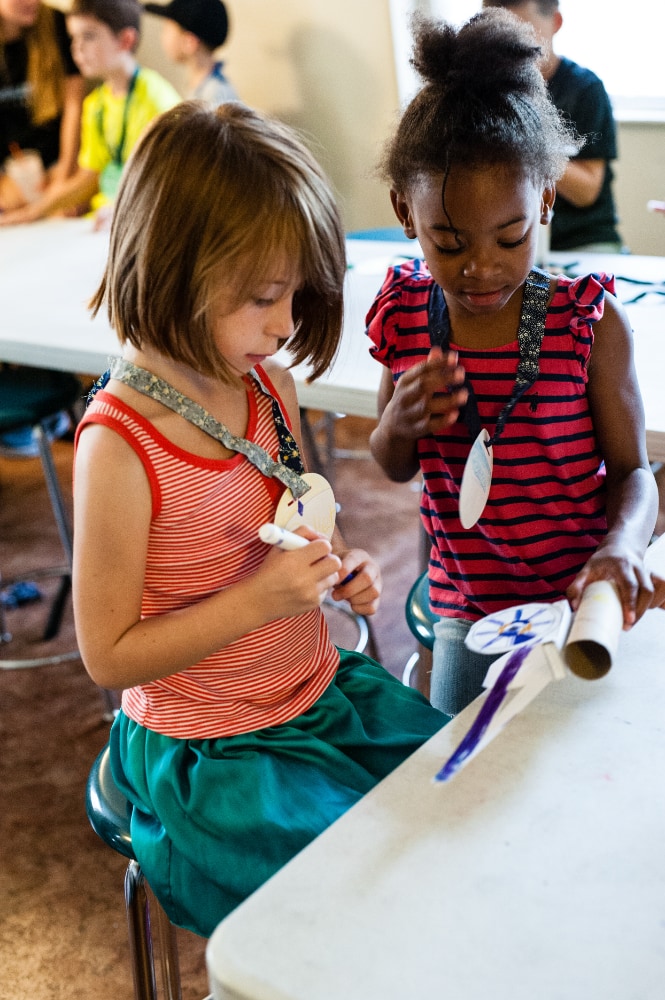
At Pierce House in Dorchester, Historic New England continues to bring history to life for thousands of students each year. Updated school programs now offer a deeper and more inclusive understanding of colonial life—illuminating the experiences of free Black, enslaved, and Indigenous people who shaped the community’s early history. Through hands-on learning and thoughtful storytelling, students are encouraged to explore how these intertwined narratives inform the world we live in today.
This year also marked a major milestone in accessibility: the completion of a project to make the first floor of Pierce House fully accessible to visitors of all abilities. This important investment ensures that more students, families, and community members can experience the site’s rich history firsthand.
Together, these efforts reflect Historic New England’s commitment to inclusive education and preservation—inviting every visitor, regardless of background or ability, to find their place in New England’s story.
Historic New England Summit
Convening Voices, Inspiring Action
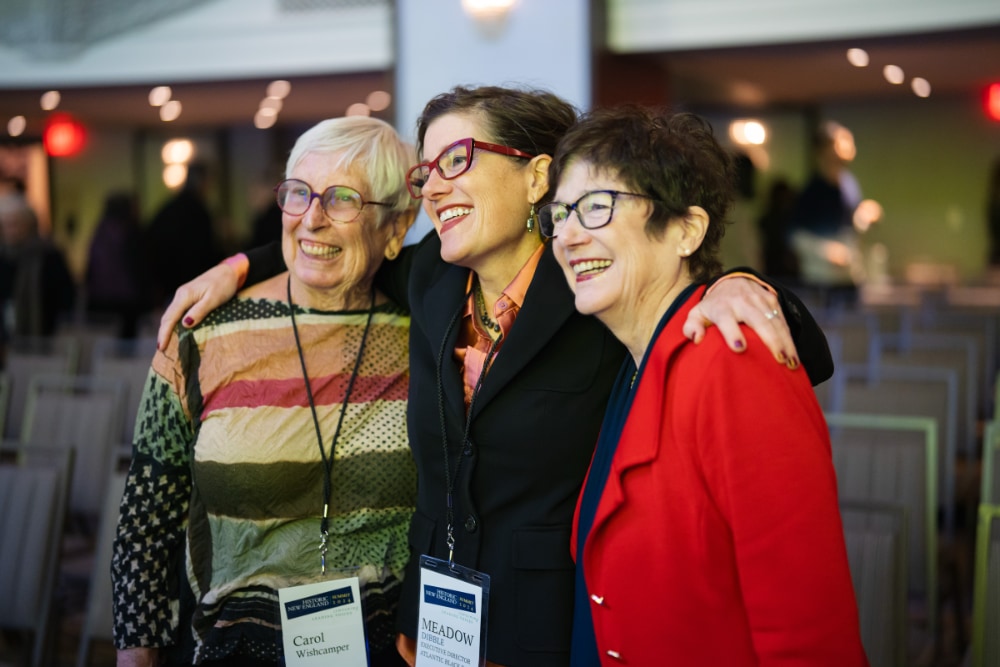
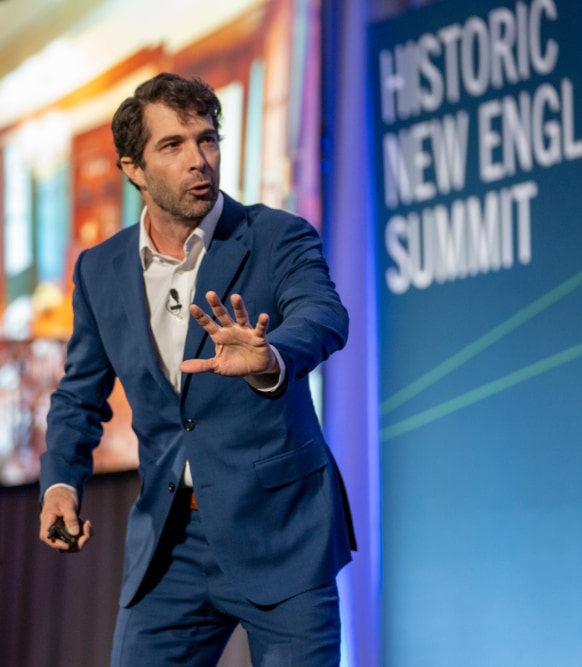
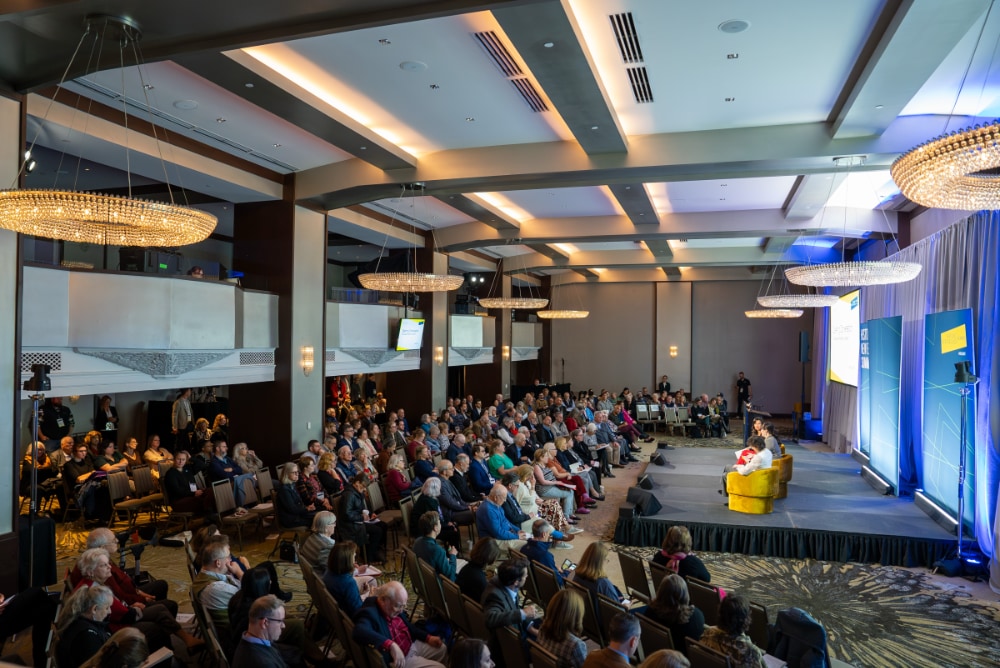
Historic New England reaffirmed its role as a national convener of thought leaders, practitioners, and visionaries through the success of Summit 2024, held in Portland, Maine. The two-day gathering brought together hundreds of participants from across the fields of preservation, architecture, history, material culture, and public humanities to explore how heritage organizations can meet the challenges of a changing world.
Through keynote presentations, panel discussions, and workshops, the Summit fostered vibrant dialogue on climate resilience, inclusive storytelling, and the evolving role of preservation in advancing community well-being. Scholars, policymakers, students, and cultural leaders shared insights that are now shaping the next generation of practice across the region and beyond.
The overwhelming response to Summit 2024 underscored Historic New England’s growing influence as a center for ideas and collaboration—a place where the past informs the future and where partnerships spark innovation.
Historic New England
Leadership
Board of Trustees
Deborah L. Allinson
Chair
David L. Feigenbaum
First Vice Chair and Clerk
Gregory D. Lombardi
Second Vice Chair
George F. Fiske, Jr.
Treasurer
Nancy B. Tooke
Assistant Treasurer
Vin Cipolla
President and CEO
Jacob D. Albert
Richard C. Albright, Jr.
Azi Djazani
Wendy L. Ecker
Edward C. Fleck
Edward F. Gerber
James F. Hunnewell, Jr.
Judith A. Johnson
Lydia F. Kimball
Allen B. Kolkowitz
Nancy Lagassé
Sandra Ourusoff Massey
Kristin L. Servison
Angie Simonds
Ruth Kennedy Sudduth
Geneva S. Thorndike
Vera Trojan
Trustees Emeriti
Edward Lee Cave
Martha D. Hamilton*
William C. S. Hicks
Elizabeth B. Johnson
Janina A. Longtine
David A. Martland
Roger T. Servison
*Deceased
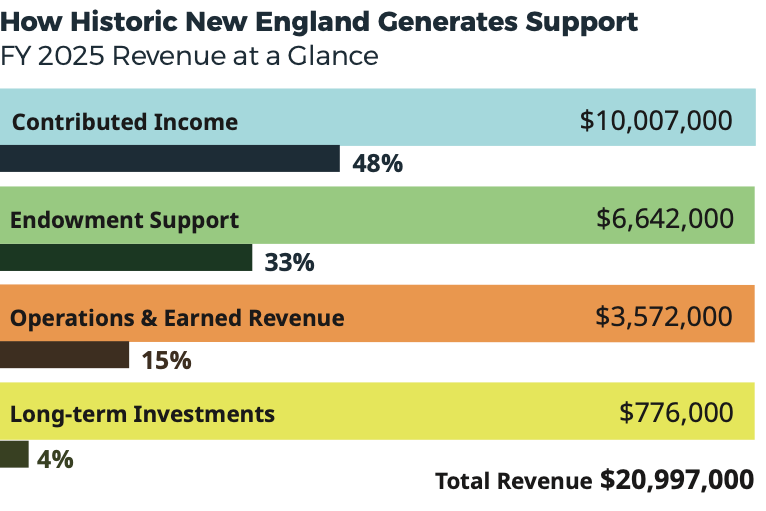
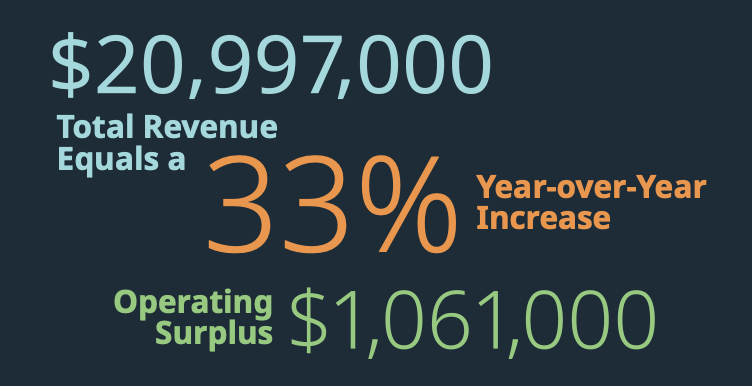
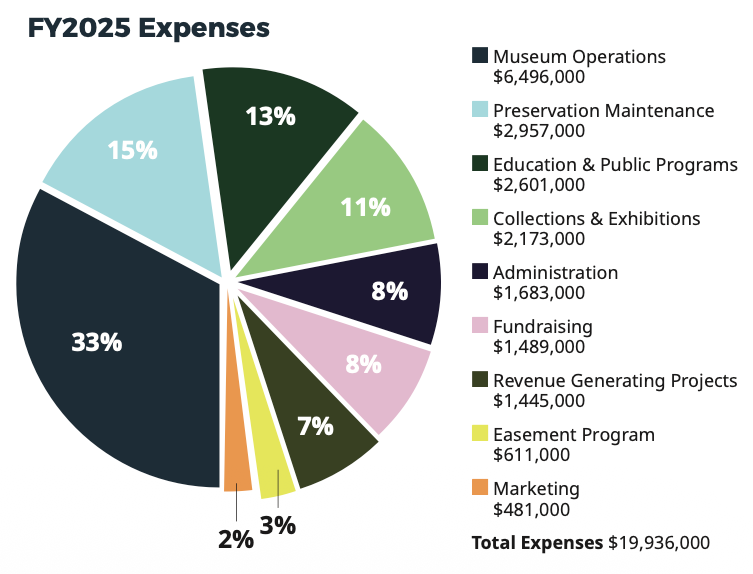
Historic New England Financials
April 1, 2024 – March 31, 2025
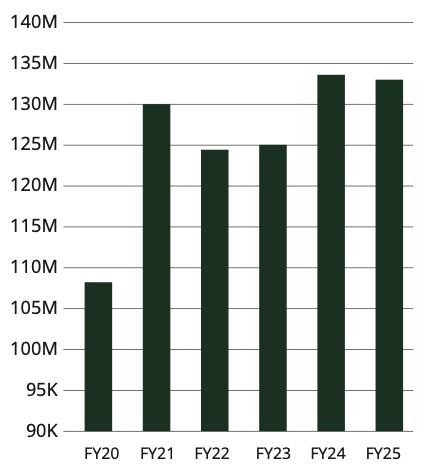
Endowment Assets